
(Note: I took the above photo in Nepal, around Christmas time in 2006.)
The holiday season is upon us, and stores have notified us well in advance with plenty of advertising and holiday decor. After all, it’s the biggest time of the year for them. Like any child, I have fond memories of fun, family gatherings over the holidays – and of course, the presents. Truth be told, I don’t remember any of my Christmas presents really well, but I do remember the fun family gatherings vividly. The presents were all just a blur. By the time I opened the tenth present and sat in a massive pile of empty boxes and torn wrapping paper, I was desensitized to it all.
As adults with more purchasing power now, Christmas giving means much less to us since we can feed our consumerism year-round (remember the iPhone 4 lineups?). I can understand how the whole giving/receiving process can bring back fond memories, but if you really think about it, it’s really only a small part of the celebration and spirit of the holidays. Being with family, old Christmas specials, snowball fights, and other activities can easily bring back the nostalgia. As for the gift giving, there are many alternatives that are less debt-inducing, more creative, and less damaging to the environment. Plus, you won’t be stuck with all that stuff you don’t need, like that re-gifted breadmaker.
1. Go Kris Kringle, but slightly modified.
My family does it sometimes, and it’s a lot of fun. Instead of selecting the gift recipient in advance, everyone brings a cheap, generic present. We use a rule where everyone draws a number to pick a present in turn or to steal a previously opened present. In our last Kris Kringle, the most stolen items were a box or ramen noodles and half a case of beer (yes, only half!). After all, food is the one gift everyone can use, unlike ornament plates and candlestick holders. So if it’s possible, make it a food-themed Kris Kringle. You can make or bake the food yourself too!
2. Give or exchange services.
This might come as a novel idea to many, but I first learned about energy exchanges in a yoga studio years ago – I exchanged my photography for free yoga. Since then, I’ve been doing energy exchanges wherever I can. It’s great – no money changes hands, but both parties receive benefits. These days, we tend to believe everything has to be purchased, and that the whole trade and barter system is lost. But really, why not cut out the money middleman? It’s really quite freeing once you get the hang of it, and best of all, you’ll suddenly discover that you’re wealthier than you thought!
If you have some special skill, then offer it, whether it be a car tuneup and oil change, dance instruction, photography sessions (e.g. family photos), home handiwork, a massage, or computer maintenance. You probably have a lot of value to give, but maybe haven’t realized how much it’s worth to someone else!
3. Try digital gifts.
This trend hasn’t totally caught on yet, but I believe we’re headed that way with eBooks, music, videos, and other information products replacing their physical media forms. I’m much happier to buy the latest rock climbing film as a High Definition download than a DVD or Blu Ray disc, and I only use my Amazon gift certificates towards buying books for my Kindle. Granted, some digital gifts require money and still follow a consumer trend, but information products are less prone to the trap of being “stuff” and at the least are a step in a better direction (especially environmentally) if you’re trying to make small changes.
4. Give a charitable donation.
A few years ago, I attended some friends’ wedding where they added a charitable twist to their celebrations. Instead of giving out frivolous wedding souvenirs, they put a card on each guest table indicating they used the money to donate to a charity instead. Instead of asking for wedding gifts, they asked for donations to their favorite charity. Over the holidays, people do get more generous and donate more to charities. I think a donation to someone’s favorite charity is a fantastic idea and totally in line with the holiday spirit.
5. Observe other people’s consumer habits, and then observe your own habits.
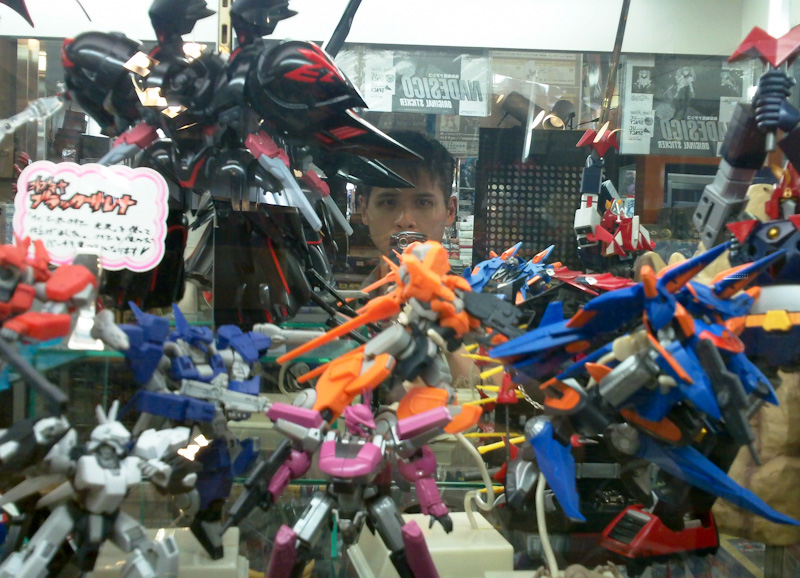
I went to the local Toys R Us and mall with my son today, and realized not much has changed on the shelves in 20 years. Aside from high-end electronics, the same toys still dominate the shelves – dolls in pink packaging, Hot Wheels, Transformers, etc. Even some of the exact same action figures I played with when I was younger were “re-issued” on the shelves, perhaps to capture a nostalgic buyer from an older generation.
Venturing into the mall, I witnessed tired and exasperated shoppers trying to find the perfect gift while hauling bags and bags of newly-purchased stuff that will probably see little use. It was enough to make me cringe. If you dare, try heading to a mall this weekend and observe the action yourself. Don’t shop. Don’t go into the store. Just observe. If you’re really brave, try observing Black Friday in the USA or Boxing Day in Canada.
6. Do some further groundwork.
One of my friends sent The Story of Stuff to me a few weeks back.
It makes many valid points, but feel free to research more and make your own conclusions. Also coincidentally, while I was writing this article, Leo Babubata of Zen Habits blogged this post, complete with getting kids on board and more on the environmental impact. I think he has some really great points.
Now, perhaps you’ve avoided the mall crowds buy shopping online, so continuing on point 5, I also recommend to observe the aftermath. Take a note (not mental – write it down) of all the things you’ve given and received over the holidays, and check up on them within only 1 month’s time. You may be surprised that most of the stuff is no longer used.
Remember, you’re not killing the Christmas spirit or being a Scrooge. I understand it’s difficult to change a tradition. Take your time. Educate the kids focusing on giving but not receiving. Make some small changes this year, see how lighter it feels to be free of stuff, and improve on it next year.


Leave a Reply